AI · Service
AI Agents that automate conversations, simplify decisions, and extend team productivity.
AI agent development that automate conversations, decisions, and daily tasks — improving speed, accuracy, and experience across your business.
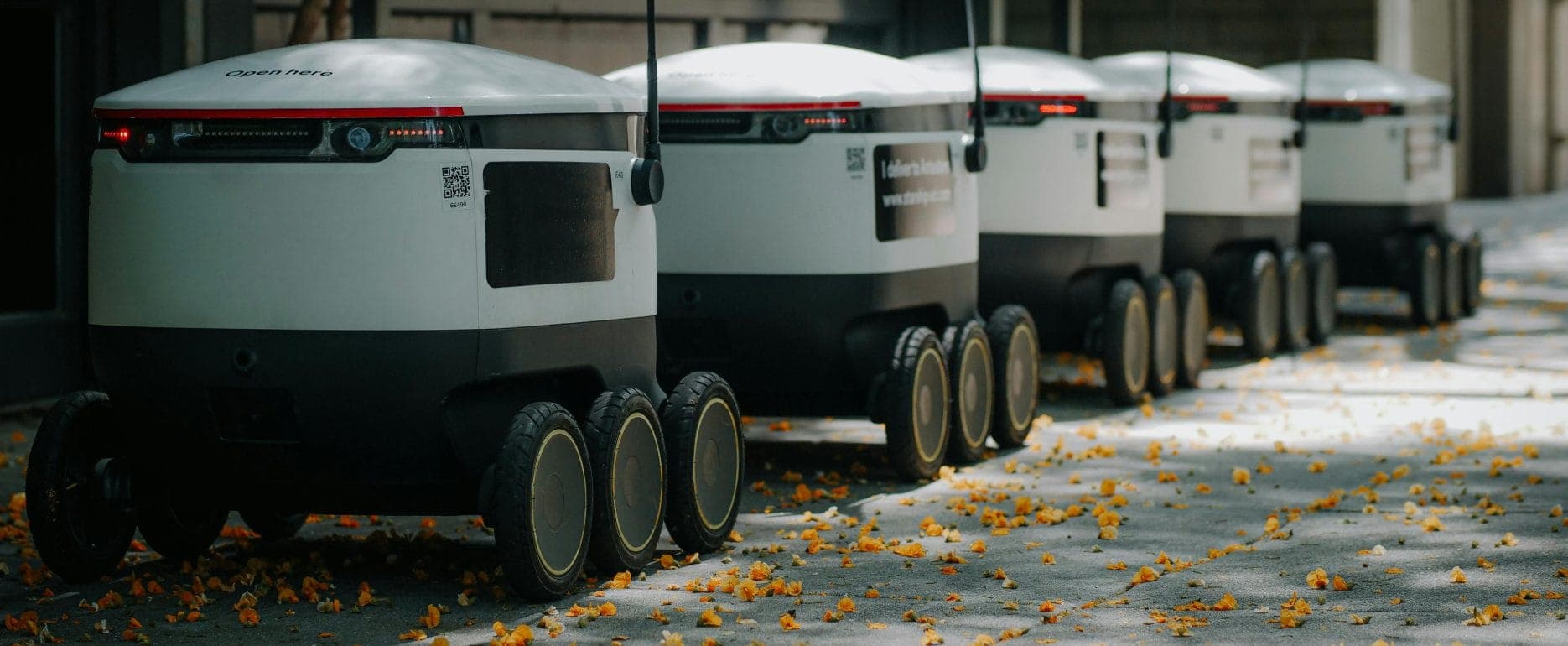
Overview
AI Agents act as autonomous extensions of your team — managing enquiries, analysing data, and performing operational tasks without constant supervision. Built using the latest natural-language and reasoning models, these agents integrate seamlessly into your existing software stack to enhance responsiveness and reduce manual workload.
Whether deployed for customer service, internal support, or operations, each agent is designed to understand context, follow business logic, and continuously learn from interactions. The result is a workforce that becomes faster, more consistent, and increasingly self-sufficient over time.
Capabilities
What we typically cover.
- 01
Autonomous Task Execution
Agents that perform structured operations such as reporting, scheduling, or record updates with minimal supervision.
- 02
Embedded Reasoning & Decision Logic
Integrate reasoning models that interpret data, select actions, and adapt to new patterns using contextual understanding.
- 03
Secure System Integration
Connect to internal tools via APIs, function calls, or MCP servers with strict access control and event logging.
The process
Every AI Agent project begins by identifying high-impact workflows and defining the scope of automation. We then create an architecture that combines reasoning models with system-level access via secure APIs or MCP tools. Each agent is tested in controlled environments to validate outcomes and ensure reliability before live deployment.
The result is a digital co-worker — always available, fully compliant, and capable of scaling with your business. Efficiency increases, human error decreases, and your teams gain the time and focus to drive innovation.
FAQs
What prospects usually ask.
What's the difference between an AI agent and a chatbot?
A chatbot answers questions inside a conversation. An agent takes actions in real systems — looking up records, updating CRMs, raising tickets, making decisions inside a defined boundary — and uses a conversation as one of several interfaces. The practical distinction: a chatbot tells you about your invoice; an agent generates and sends it. Agents reason about what to do, then call tools to do it.How accurate and reliable are AI agents in production?
When scoped properly, very. The reliability comes from constraining what the agent can actually do — explicit tools with validated inputs, structured outputs, defined fallback behaviour, and human-in-the-loop for anything irreversible. Agents go wrong when they're given too much latitude and asked to invent decisions in the absence of clear rules. We design for narrow, well-defined responsibilities — and expand scope only after the narrow version proves itself.How much does an AI agent project cost?
A focused agent (e.g. customer-support triage, internal helpdesk over company knowledge, sales-call summary and CRM updates) typically costs £15,000–£50,000 to build and deploy. More substantial agents with multi-system integration, role-based permissions, and audit infrastructure are more like £50,000–£200,000. Ongoing API costs depend on conversation volume but typically sit between £200 and £2,000 a month.How do you control what an agent is allowed to do?
Through tool design and access control. Agents can only call functions you explicitly expose — and each function checks the user's permissions, validates inputs, and logs the action. Destructive or sensitive operations (sending money, deleting records, sending external email) require human confirmation by default. The agent's freedom of action lives in the tools it has, not in the model itself.Which models and platforms do you build agents on?
Anthropic's Claude (typically Sonnet for cost-effective production work, Opus for harder reasoning) is our default for agentic workloads — strong tool use, good steerability, generous context. OpenAI's GPT models for use cases that benefit from their broader ecosystem. We build with the Anthropic and OpenAI Agent SDKs for native agentic loops, and add MCP servers when secure tool access to internal systems is needed.Can agents integrate with our existing systems via MCP?
Yes — MCP (Model Context Protocol) is increasingly the right pattern for connecting agents to internal data and tools. We deploy an MCP server that mediates between the agent and your CRM, ERP, database, or internal APIs — with explicit authentication, per-tool authorisation, audit logging, and rate limits. The agent gets context-aware access to your systems without the security trade-offs of direct database connections.How long does it take to deploy an agent into production?
A focused agent against an existing API surface can be in internal testing within four to six weeks and in front of users by week eight to twelve. Agents requiring new tool development, integration build, or significant change management run twelve to twenty weeks. We always start with a narrow first deployment and expand scope based on real-usage data rather than launching broad.
More in AI
Often paired with this work.
AI development
Practical, cost-effective AI development. A2Z Software builds chatbots, automation systems, and AI integrations that help businesses work smarter.
Legacy systems AI integration
Modernise legacy systems with AI-driven connectivity. We integrate AI through APIs, mirrored databases, or MCP servers — no full rebuild required.
AI automation
Streamline operations with AI-driven workflow automation. Connecting systems using APIs, MCP servers, and other tools to scale processes.
ChatGPT apps
ChatGPT-powered apps that connect securely to internal data. Enabling safe queries, preset functions, and workflow automation through AI.
Sectors we serve
Where this lands most often.
Got a system worth building? Let's talk it through.
Tell us what you're trying to solve. We'll come back inside two working days with honest thoughts on scope, approach, and what a working partnership could look like.
- hello@a2ztech.co.uk
- Studio
- Engine Shed, Bristol
- Response
- Within 2 working days
- Building since
- 2003